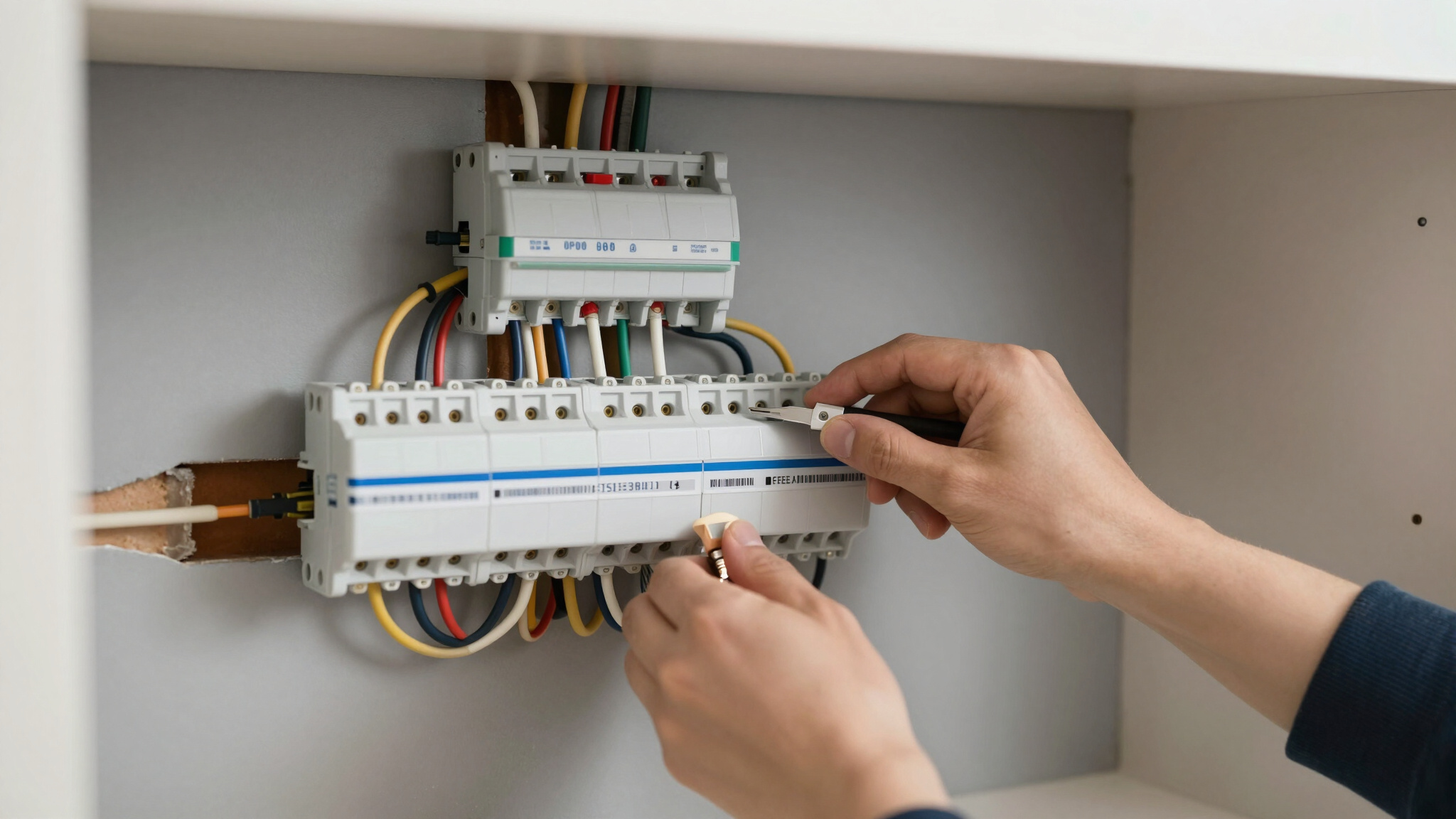
Landlords must have fixed electrical installations in residential rental properties inspected and tested by a qualified person at least every 5 years using an Electrical Installation Condition Report (EICR). INCR are ready to provide you with this service, we have all the expertise and qualifications to carry out this work.
Along with carryout EICR's we provide PAT testing, Alarm and Safety Checks.

Landlords, residential and commercial inspection and testing
Fault finding
This is a step-by-step process of locating and fixing hidden problems in a power system, such as a tripped breaker or a dead socket.
Process
Safety and Preparation
-
Safe isolation: Turn off the power and lock out the breaker before you touch any wires.
-
Prove dead: Use a two-pole voltage detector to confirm there is no live current.
-
Unplug appliances: Disconnect portable devices to stop them from masking the true problem.
Visual Check
-
Look for damage: Check for melted plastic, burn marks, or loose wires.
-
Use your senses: Smell for burning plastic or look for water stains near switches and sockets.
Testing and Isolating
-
Half-split method: Open a socket or junction box near the middle of the circuit to split it into two halves.
-
Test continuity: Use a multimeter on the dead circuit to check the resistance and find where the broken path or short is located.
-
Narrow it down: Move along the wire to test smaller sections until you find the exact spot causing the fault.
-
What specific symptom are you seeing (e.g., a tripping RCD, a dead outlet, burning smell)?
-
Is it on a ring or radial circuit?
PAT testing
PAT testing (Portable Appliance Testing) is the routine safety inspection of plug-in electrical equipment to ensure it is safe for tenants or employees. INCR are all set to carry out this testing.
Key requirements of PAT testing
-
Residential Landlords: While general private tenancies in England do not make PAT testing a strict standalone law, landlords must legally maintain supplied appliances under the Landlord and Tenant Act 1985. PAT testing serves as the primary way to prove safety compliance and cover insurance liabilities.
-
Commercial & HMO Properties: Commercial spaces and Houses in Multiple Occupation (HMOs) face stricter health and safety standards, making regular equipment testing essential to meet workplace and licensing rules.
-
What is Checked: The process combines a thorough visual check of cables, plugs, and casings with specialized electronic tests (like earth continuity and insulation resistance) for items like fridges, kettles, and microwaves.
Fire alarm testing
INCR offer combined residential and commercial fire alarm testing, EICR electrical safety certificates, and maintenance services tailored to landlord compliance.
-
Fire Alarm Testing & Servicing: Periodic inspection, sensor performance tests, and functional check documentation to meet British Standards (BS 5839) for residential rentals, HMOs, and commercial units.
-
EICR Certificates: Mandatory Electrical Installation Condition Reports required every 5 years for commercial properties and residential tenancies.
-
Smoke & Carbon Monoxide Alarms: Installation, replacement, and start-of-tenancy operational checks.
Emergency light testing
Landlords of commercial properties and multi-occupancy residential buildings (like HMOs and communal areas of flats) must legally test emergency lighting. The building owner, landlord, or designated "Responsible Person" must ensure testing happens, even if maintenance is outsourced. Testing must be logged. Standard single-family private rentals usually do not require emergency lighting unless there are shared escape routes (e.g., HMOs or apartment building corridors). Commercial properties require it.
Why do we need an electrician in this instance?
-
System Inspection and Inventory: Component Check: Inspecting all emergency light fittings, exit signs, and central battery systems for visible damage. Logbook Review: Checking existing safety records to ensure previous tests were documented correctly.
-
Functional and Discharge Testing: Mains Failure Simulation: Switching off the regular power supply to the lighting circuits using a test switch. Duration Testing: Verifying that every emergency light switches on instantly and stays illuminated for the required legal duration (typically 3 hours for an annual test). Battery Verification: Checking that internal batteries hold a sufficient charge to power the lamps during an outage.
-
Fault Diagnosis and Repairs: Defect Identification: Locating failed backup batteries, dead bulbs, broken LEDs, or faulty charging units. Component Replacement: Replacing old or failing batteries and upgrading broken fittings to new, energy-efficient LED units.
-
Certification and Compliance: Logbook Updates: Signing and dating the building's physical or digital fire safety logbook. Certificate Issuance: Providing an official Emergency Lighting Compliance Certificate to prove your property meets legal standards for insurance and fire authority audits.
Landlords/rental EICR's
Landlords in England must have the electrical installations in their rental properties inspected and tested by a qualified person at least every 5 years. INCR can make sure you comply with this.
What you need to know
-
Residential Inspection and Testing: Mandatory every 5 years for private and social rented residential properties. New builds or complete rewires can use an initial Electrical Installation Certificate (EIC) for the first 5 years.
-
Commercial Inspection and Testing: Electrical Testing (EICR): Commercial and industrial buildings typically require testing every 3 to 5 years depending on the business environment and risk level (e.g., offices every 5 years, industrial sites every 3 years).
Inspection & testing services
Our Finished Projects
Explore our recent residential electrical installations across the South West, from full rewires to precision lighting upgrades.